SSB Running Time: Why It Matters
If you have ever stared at a track on a cold morning, heart pounding, dreading the whistle, you already understand why SSB running time decides more defence careers than almost anything else you will train for. Everyone obsesses over the written exam, the OIR, and the PPDT story-writing—but barely anyone talks about the run. Then the ground opens up, your legs go heavy, and a fit candidate gets screened out because they simply were not running-conditioned.
The truth is simple: your stamina is scored before your personality is. In the 5‑day Services Selection Board (SSB) process, physical fitness runs through nearly every round, from the energy you carry into the screening hall to the ground tasks on Days 3 and 4. Walking in underprepared for the SSB running time is the fastest way to throw away months of hard work.
This guide gives you the exact 1.6 km and 2.4 km standards to aim for, male vs female expectations, how running is really assessed, the mistakes that quietly fail candidates, and a 30‑day plan to arrive confident and fast.
A Story You Will Recognise
The Day Breath Runs Out
Last year, Arjun—a bright engineering student from Madurai—cleared the AFCAT written exam with flying colours. The whole city was proud. He had solved every reasoning paper, memorised every current affair, and walked into the SSB with absolute confidence. Then on the ground, during the group obstacle task, his breath left him halfway. His legs cramped. He finished, but barely, and the assessing officers saw a candidate who had not done enough running. He was screened out.
Arjun’s problem was never intelligence. It was that he treated the SSB running time as optional. He had pushed-ups and sit-ups at home, but he never timed a real distance run on the track. When the moment arrived, his body betrayed him.
You do not have to make the same mistake. A steady, honest running routine is the difference between being “fit on paper” and being fit on the ground.
SSB Running Time: The Numbers
There is no single, identical stopwatch for every board, but the benchmarks below are what trainers and selection centres consistently use for officer entry. Aim to hit the stronger end, not just the minimum.
1.6 km Standard
-
Comfortable baseline: run 1.6 km in roughly 6–7 minutes—this is the sweet spot most SSB coaching plans target for officer aspirants.
-
Group I (full marks): under 5 min 30 s
-
Group II (qualifying): under 5 min 45 s to 6 mindoondefencedreamers+1
-
For Air Force entry, an initial 1.6 km in ~10 minutes plus basic push-ups and chin-ups is the common starting bar.
Treat 1.6 km as your “comfortable everyday” distance. You should be able to hold a conversation at the end of it, not collapse.
2.4 km Standard
-
Officer-entry benchmark: for NDA and CDS, the 2.4 km test is measured at under 10 min 30 s for full marks and under 11 minutes to qualify.
-
Academy standard: once you reach training, the PT run is 2.4 km in roughly 9 minutes (male) and under 12 min 30 s (female).
-
Our practical target: build up to running 2.4 km in 12–14 minutes comfortably before your board.
-
Why both distances? The 1.6 km builds your base speed, and the 2.4 km proves you have real endurance. Selection centres want to see you handle both with a calm, controlled pace.
Male vs Female Expectations
The physical demand is the same for male and female officers—the extra time is the only difference.
-
Male candidates: target 1.6 km in ~6 min and 2.4 km in ~9–12 min.nimbusdefenceacademy+1
-
Female candidates: target 1.6 km in ~7–8 min and 2.4 km in under 12 min 30 s.
-
Non-negotiables for both: steady breathing, upright posture, and the ability to keep a controlled pace while a group runs alongside you.
Do not fixate only on speed. Test assessors watch how you run—whether you panic, surge early, and fade. Consistency and composure matter more than a one-off fast lap.
How Running Is Assessed
Running does not always appear as a single “race” with a scoreboard. It is woven through the week:
-
Screening Day (Day 1): you are assigned chest numbers and must sit through the OIR and PPDT fresh and focused. Fatigue from poor training hits you here first.wikipedia+1
-
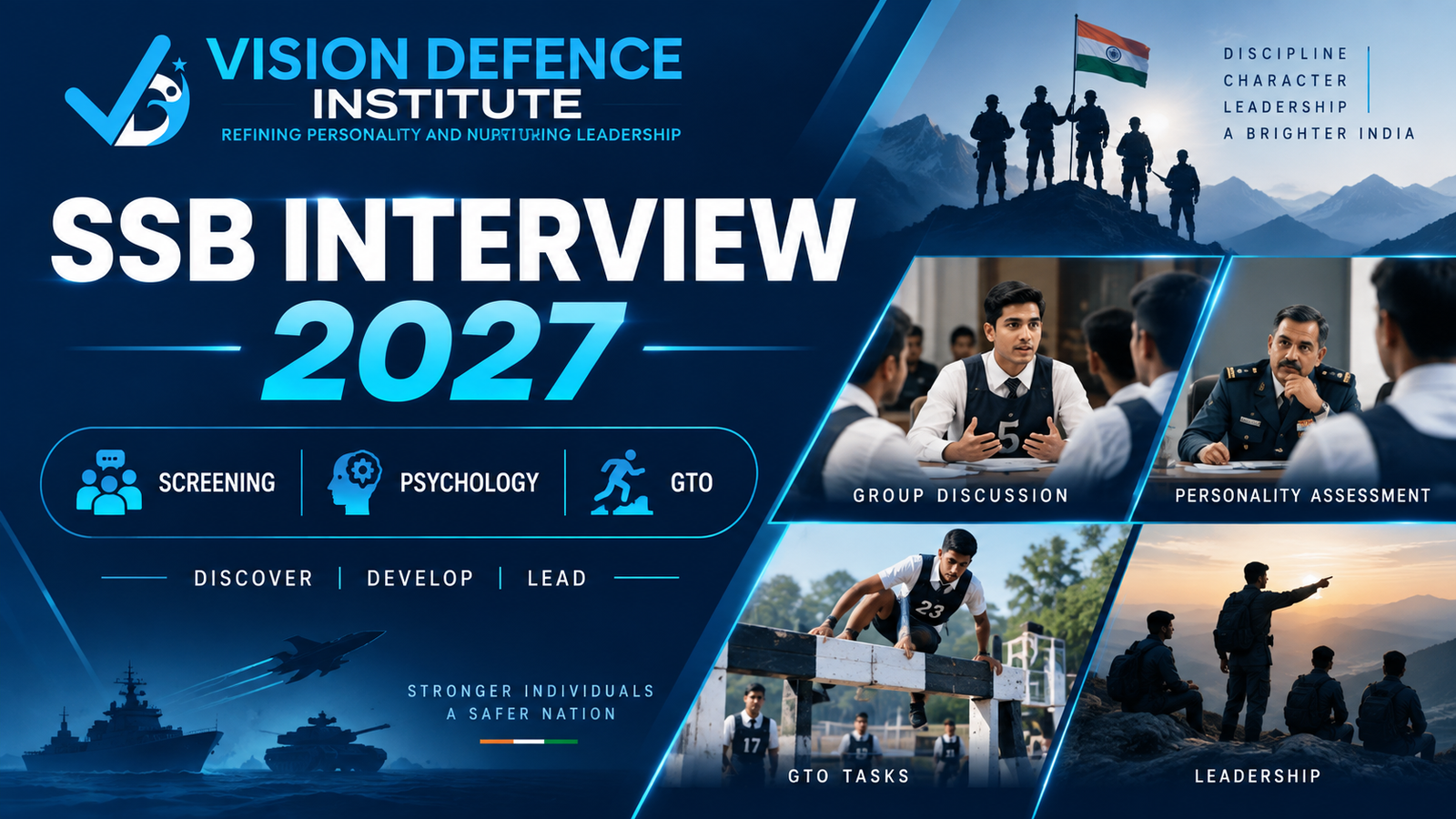
GTO Ground Tasks (Days 3–4): the Snaked Race / Group Obstacle Race and the individual obstacles demand genuine running capacity and coordination.pw+2
-
Command and Group Tasks: these are done outdoors across the ground. If you are out of breath after each sprint, you cannot think clearly to lead.
-
Later Academy PT: after selection, the official fitness run (often 2.4 km) is a graded event, so the habits you build now carry you forward.
In short, SSB running time is assessed as physical proof of your spirit, not a box to tick. Strong runners stand out; unprepared ones get exposed.
Common SSB Running Mistakes
Most candidates fail the running test long before the ground. Avoid these:
-
Skipping distance training. Push-ups build arms, not lungs. If you never run a timed 1.6 km or 2.4 km, you cannot suddenly produce it.
-
Starting too fast. Beginners sprint the first lap, hit a wall, and walk the last two. Always start at 70–80% effort.
-
No warm-up or cool-down. Running cold increases injury risk and stiffens your legs for the days that follow.
-
Ignoring time. Running the right distance at any speed is not enough—train with a stopwatch so the pace feels automatic.
-
Changing shoes at the last minute. New, stiff shoes cause blisters exactly when you need trust in your feet.
-
Overtraining in the final week. Peak early, then rest; an injury 10 days before can ruin everything.
SSB Running Time: 30-Day Plan
Follow this simple progression. Start gently if you are new, and build steadily every week.
Weeks One and Two
-
Days 1, 3, 5: run 1.6 km at a relaxed pace, then finish with 2–3 × 100 m relaxed sprints.
-
Day 2, 4: brisk walk or 3–4 km light run to build base distance.
-
Rest days: light stretching, push-ups, and sit-ups—keep the body moving.
Weeks Three and Four
-
Primary run: 2.4 km, aiming to stay inside 12–14 minutes.
-
Speed day: 400 m repeats × 6 with 2 minutes’ rest between each; this teaches a faster SSB running time.
-
Endurance day: extend to 4–5 km at an easy, even pace once a week.
-
Mock test: once a week, run the exact distance and time yourself under realistic conditions.
The Final 48 Hours
-
Do only light jogging and stretching—let your legs recover fully.
-
Sleep well, hydrate, and eat lightly the night before.
-
On the day, pour water on your head at the turning point to stay cool, as official guidance advises.
Speed, Stamina and Strength
A faster SSB running time is built, not wished for:
-
Interval work: short hard repeats followed by slow recovery lift both speed and endurance.
-
Long, slow distance: one longer run weekly teaches your heart to keep going.
-
Strength basics: 20+ push-ups, 20+ sit-ups, and a few chin-ups protect you from injury and support your stride.ssbcrackexams+1
-
Breathe rhythmically: match breaths to your stride (for example, inhale two steps, exhale two) so you never gasp.
Running Shoes and Prep Tips
-
Choose already-broken-in shoes. Train in the exact pair you will wear at the board for at least two weeks.
-
Train outdoors. If your test is on a dirt or asphalt track, practise on a similar surface, not just a treadmill.
-
Dress for heat. Train in the morning or evening if possible, and wear light clothing.
-
Listen to your body. If you ever feel giddy or sick during a run, stop and seek help immediately—this is official advice for a reason.
-
Use a stopwatch and track progress. Logging your SSB running time each week is the single most honest motivator you have.
SSB Running Time: Final Advice
Arjun’s story does not have to be yours. The written exam gets you in the gate; physical fitness earns you an officer’s badge. Start with 1.6 km, build to 2.4 km, respect the male vs female benchmarks, avoid the classic mistakes, and follow the 30‑day plan above.
Ready to start? Book a free demo class at Vision Defence Institute, Madurai and get a personalised running and SSB preparation plan. For more, read our guide on NDA coaching in Madurai and step-by-step SSB interview preparation. For official context, check these trusted resources: SSBCrack’s fitness standards and the Indian Army physical test details.
📞 WhatsApp: +91 81222 87718 | 📧 visiondefencemduofficial@gmail.com
📍 2ND STOP, S ALANGULAM, Kulamangalam Main Rd, Madurai, Tamil Nadu 625017
Facebook · Instagram · YouTube: Vision Defence Institute