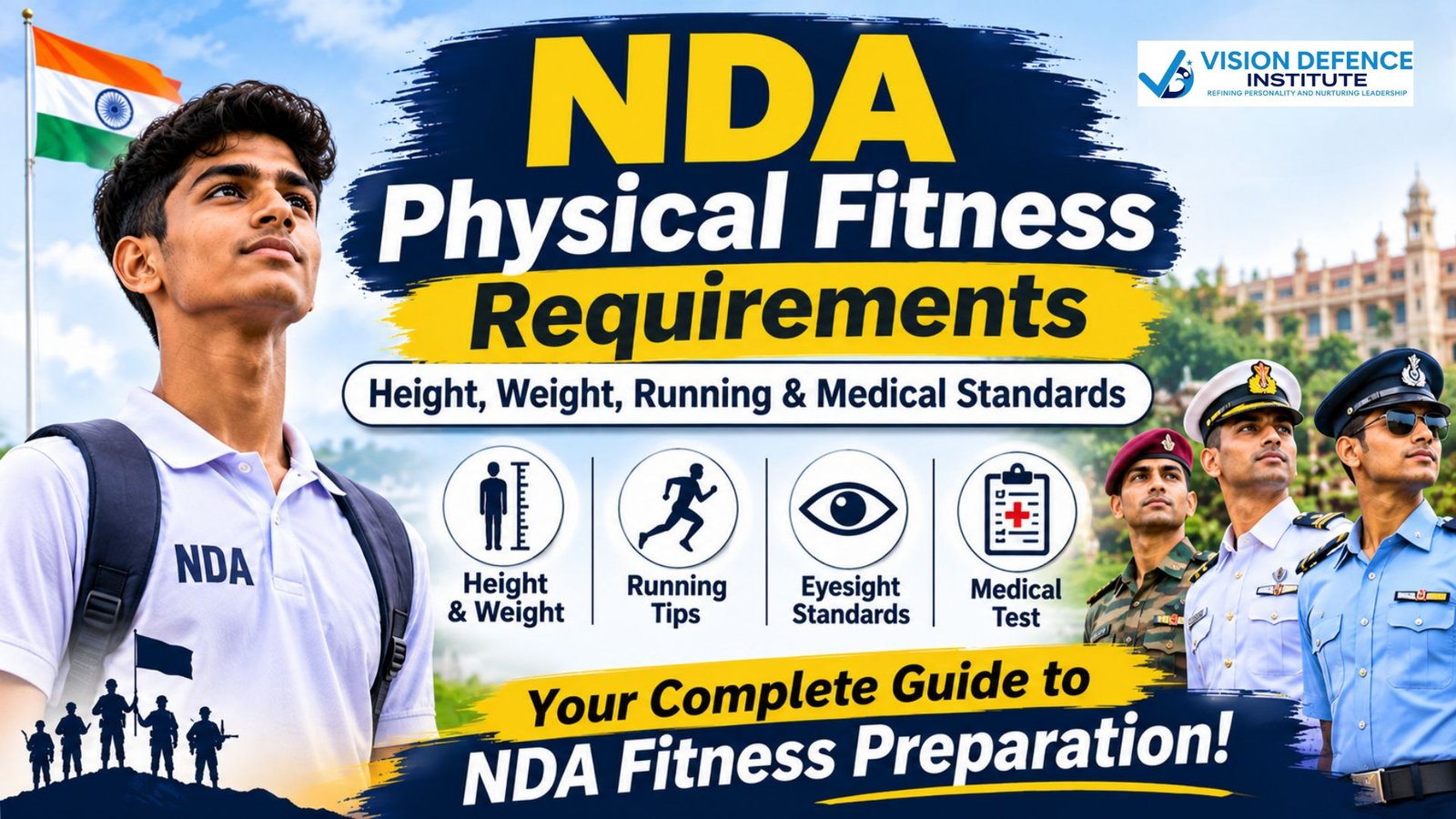
NDA Physical Fitness Requirements: Height, Weight, Running & Medical Standards
Do you dream of becoming an officer in the Indian Army, Navy or Air Force? Preparing for the National Defence Academy (NDA) examination requires more than academic knowledge. Physical fitness and medical suitability are also important parts of the selection process.
Many NDA aspirants have questions such as:
- What is the minimum height required for NDA?
- What should be the ideal weight for NDA candidates?
- Is running compulsory for NDA selection?
- What are the eyesight requirements?
- What happens during the NDA medical examination?
Understanding these requirements before applying can help students prepare with confidence and avoid unexpected problems during the selection process.
In this guide, we will explain the NDA physical fitness requirements, height and weight standards, running preparation, eyesight criteria and important medical conditions that candidates should understand.
1. What Are the NDA Physical Fitness Requirements?
NDA candidates must meet the prescribed physical and medical standards to become eligible for admission to the National Defence Academy.
The medical examination evaluates whether a candidate is physically and mentally fit for military training and future service responsibilities.
The major areas assessed include:
- Height and weight
- Body proportion and physical development
- Eyesight and vision
- Hearing ability
- General physical health
- Bone and joint condition
- Cardiovascular and respiratory health
- Overall medical fitness
Candidates who clear the written examination and SSB selection process must also satisfy the prescribed medical standards.
Important: Clearing the NDA written examination does not automatically guarantee medical fitness or final selection.
2. NDA Height Requirements for Male and Female Candidates
Height is one of the important physical measurements considered during the NDA medical examination.
The minimum height requirement depends on the applicable service standards, branch and permitted regional or category-based relaxations.
As a general reference, the commonly prescribed minimum entry heights are:
| Candidate category | General minimum height |
|---|---|
| Male candidates | 157 cm |
| Female candidates | 152 cm |
Certain candidates from specified geographical regions may receive height relaxations under the applicable rules.
For example, eligible candidates from Gorkha communities and certain Himalayan and North-Eastern regions may receive relaxations.
Height Requirements for Indian Air Force Aspirants
Candidates interested in Air Force flying duties must satisfy additional anthropometric requirements.
These can include:
- Minimum height
- Sitting height
- Leg length
- Thigh length
The Air Force has separate standards for different duties and branches.
Therefore, meeting the general height requirement does not automatically mean that a candidate qualifies for every Air Force role.
Note: These figures are general reference points, not a substitute for the exact NDA examination notification and service-specific medical standards.
3. NDA Weight Requirements: How Much Should You Weigh?
Weight is assessed in relation to height, age and body development.
There is no single weight requirement applicable to every NDA candidate.
The prescribed height-and-weight charts help medical authorities assess whether a candidate’s weight is within the acceptable range.
Factors Considered During Weight Assessment
- Candidate’s height
- Candidate’s age
- Body composition
- Physical development
- Overall medical condition
For example, a candidate who is 165 cm tall may have a different acceptable weight range from someone who is 175 cm tall.
Both underweight and overweight conditions may require medical assessment.
How to Maintain a Healthy Weight for NDA
Students preparing for NDA should focus on maintaining a healthy lifestyle.
Some useful habits include:
- Eat a balanced diet with sufficient protein.
- Include fruits and vegetables in daily meals.
- Drink enough water.
- Exercise regularly.
- Maintain a consistent sleep schedule.
- Avoid unhealthy crash diets and excessive weight-gain methods.
Do not try to reach a particular weight through unsafe dieting or extreme exercise.
4. NDA Running Requirements: How Much Should You Run?
Running is an important fitness activity for students preparing for military training.
However, candidates should understand an important distinction:
The NDA selection process does not prescribe one universal running distance and time as a separate qualifying test for every candidate in the same way that some recruitment physical tests do.
Running should be considered part of general physical preparation rather than a guaranteed standalone NDA selection requirement.
Why Is Running Important for NDA Aspirants?
Regular running helps develop:
- Cardiovascular endurance
- Stamina
- Leg strength
- Breathing control
- Physical discipline
- Overall fitness
These qualities can help students adapt to the demands of military training.
Suggested Running Preparation
Beginners should start gradually and increase their running distance according to their fitness level.
| Preparation level | Suggested activity |
|---|---|
| Beginner | 10–15 minutes of brisk walking |
| Intermediate | 10–15 minutes of light jogging |
| Improving stamina | 15–20 minutes of continuous jogging |
| Advanced | 20–30 minutes of running, according to fitness |
These are suggested training activities, not official NDA qualifying timings.
Tips to Improve Running Performance
- Start with a warm-up before running.
- Maintain a comfortable running pace.
- Increase distance gradually.
- Practise proper breathing.
- Include recovery days.
- Wear suitable running shoes.
- Avoid training through pain or injury.
Students who are new to exercise should begin with walking and light jogging before attempting longer distances.
5. NDA Eyesight Requirements and Vision Standards
Eyesight is another important part of the NDA medical examination.
Vision standards vary depending on the service and branch a candidate wants to join.
Different standards may apply to:
- Army Wing
- Naval Wing
- Air Force Flying Branch
- Air Force Ground Duty Branches
Important Vision Parameters
Medical authorities may assess:
1. Distance Vision
The candidate’s ability to see objects clearly at a distance.
2. Near Vision
The ability to read and identify objects at a closer distance.
3. Colour Perception
The ability to distinguish different colours.
4. Myopia and Hypermetropia
Medical assessment of short-sightedness and long-sightedness.
5. Binocular Vision
The ability of both eyes to work together effectively.
Can Candidates Wearing Spectacles Apply for NDA?
Having spectacles does not automatically mean that a candidate is disqualified from NDA.
However, the permitted degree of refractive error and corrected vision requirements depend on the service and branch.
Air Force flying duties have particularly specific visual and anthropometric standards.
Candidates should undergo an eye examination with a qualified ophthalmologist and compare the results with the latest official medical standards.
6. NDA Medical Examination: What Do Doctors Check?
After clearing the required SSB assessment, candidates undergo a detailed medical examination at the designated military medical facility.
The purpose is to determine whether the candidate meets the prescribed medical fitness requirements.
Some important areas examined include:
A. General Physical Examination
Doctors assess:
- Height and weight
- Body proportions
- Physical development
- Posture
- General health
B. Eyes and Vision
The examination may include:
- Distance vision
- Near vision
- Colour perception
- Eye movements
- Other relevant eye conditions
C. Hearing and Ear Examination
Doctors examine hearing ability and check for relevant ear conditions.
Earwax and certain ear-related problems may require treatment or further assessment.
D. Dental Examination
Dental health is also assessed.
Candidates should maintain proper oral hygiene and seek dental treatment for problems that require attention.
E. Heart and Respiratory Health
Medical professionals assess:
- Heart function
- Blood pressure
- Respiratory health
- Lung function
- Relevant medical history
F. Bones, Joints and Muscles
Doctors may check:
- Spine alignment
- Joint movement
- Previous fractures
- Limb function
- Musculoskeletal conditions
Any condition that affects physical performance or military duties may require further evaluation.
7. Common Medical Conditions That NDA Aspirants Should Know About
Certain medical conditions may lead to further investigation or a finding of unfitness, depending on their severity and the applicable standards.
Some conditions mentioned in the official NDA medical guidelines include:
| Medical condition | Why it matters |
|---|---|
| Deviated Nasal Septum | May require assessment of nasal function |
| Ear Wax | Can affect ear examination and hearing |
| Underweight or Overweight | Weight must meet prescribed standards |
| Tonsillitis | Recurrent or significant infection may require assessment |
| Piles | Requires medical evaluation |
| Varicocele | May require specialist examination |
| Hydrocele | Requires medical assessment |
| Gynaecomastia | May require clinical evaluation |
| Spinal or Joint Problems | May affect physical performance |
Important: The presence of a condition does not automatically mean permanent rejection in every case. The medical board determines fitness according to the applicable standards and the severity of the condition.
Candidates should not hide their medical history or attempt self-treatment to pass a medical examination.
8. NDA Physical Fitness Preparation: A Daily Routine for Aspirants
Students should develop a consistent fitness routine alongside their academic preparation.
Here is a sample routine for beginners.
| Activity | Suggested duration |
|---|---|
| Warm-up and stretching | 5–10 minutes |
| Brisk walking or jogging | 15–20 minutes |
| Push-ups (modified if needed) | 5–10 minutes |
| Squats | 10–15 repetitions |
| Plank | 15–30 seconds |
| Cool-down stretching | 5 minutes |
The routine should be adjusted according to the student’s age, fitness level and health condition.
Weekly Fitness Plan
| Day | Fitness activity |
|---|---|
| Monday | Light running and stretching |
| Tuesday | Bodyweight strength exercises |
| Wednesday | Brisk walking and jogging |
| Thursday | Core exercises and mobility |
| Friday | Running and stamina development |
| Saturday | Outdoor sports and light exercise |
| Sunday | Rest and recovery |
Students should not suddenly increase their exercise intensity. Proper rest and recovery are essential for safe improvement.
9. Common Physical Fitness Mistakes NDA Aspirants Should Avoid
Many students focus on examination preparation but neglect their physical health.
Here are some mistakes to avoid:
1. Starting Running Without Preparation
Running long distances without building stamina can lead to injuries.
Begin with walking and light jogging.
2. Ignoring Eye Health
Students should not ignore blurred vision, eye strain or other vision-related symptoms.
Get your eyes examined by a qualified professional.
3. Following Unhealthy Diet Plans
Skipping meals or using extreme diets to change body weight can negatively affect health.
Follow a balanced diet instead.
4. Avoiding Medical Check-ups
Do not wait until the final selection stage to discover a medical concern.
An early health assessment can help you understand whether further medical evaluation is necessary.
5. Neglecting Sleep and Recovery
Insufficient sleep can affect physical performance, concentration and recovery.
Maintain a regular sleep routine.
10. How Vision Defence Helps NDA Aspirants Prepare
Becoming an officer in the Indian Armed Forces requires academic preparation, discipline, confidence and physical fitness.
At Vision Defence, NDA aspirants can receive structured guidance to prepare for the written examination and develop the skills needed for the selection process.
Our preparation approach focuses on:
- Subject-wise NDA examination preparation.
- Mathematics and General Ability Test practice.
- Regular mock examinations.
- SSB interview guidance.
- Communication and personality development.
- Physical fitness awareness.
- Discipline and time management.
Our aim is to help students understand the selection process and prepare systematically for their defence career goals.
If you are planning to appear for NDA, begin your preparation early and give equal importance to academics and fitness.
Frequently Asked Questions (FAQs)
1. What is the minimum height required for NDA?
As a general reference, the commonly prescribed minimum height is 157 cm for male candidates and 152 cm for female candidates. However, service-specific requirements and permitted relaxations may apply.
2. What is the weight requirement for NDA?
There is no single fixed weight for all candidates. Weight is assessed according to height, age and the applicable medical standards.
3. Is running compulsory for NDA selection?
There is no universal standalone running distance and timing test for all NDA candidates in the selection process. However, running is useful for developing physical endurance and fitness.
4. Can a candidate wearing spectacles join NDA?
Some candidates wearing spectacles may be eligible, depending on their visual measurements and chosen service. Air Force Flying Branch standards are particularly specific.
5. Can overweight candidates apply for NDA?
Candidates must meet the prescribed height-and-weight standards. Overweight candidates may be assessed by the medical board according to the applicable guidelines.
6. Is medical examination compulsory for NDA?
Yes. Candidates who reach the medical examination stage must satisfy the prescribed medical fitness standards.
7. Can girls join NDA?
Yes. Female candidates can apply for NDA and must meet the prescribed physical and medical requirements.
8. What happens if a candidate fails the NDA medical examination?
Candidates declared medically unfit may have access to the applicable appeal or review medical procedures, subject to the rules and timelines provided by the authorities.
9. How can I improve my stamina for NDA?
Regular walking, gradual running, strength exercises, proper nutrition and sufficient rest can help improve stamina.
10. When should I start NDA physical preparation?
Students can begin developing healthy fitness habits during school. Starting gradually after Class 10 gives them time to build endurance and strength safely.
Conclusion
Physical fitness is an important part of becoming an officer in the Indian Armed Forces.
NDA aspirants should understand the prescribed height, weight, eyesight and medical standards before appearing for the selection process.
Remember that physical preparation should not be limited to running or strength exercises. Healthy habits, discipline, proper nutrition and regular medical check-ups are equally important.
If your dream is to join the Army, Navy or Air Force, start developing your physical fitness along with your academic preparation.
Prepare with discipline. Build your strength. Move closer to your defence career with Vision Defence.
Contact Vision Defence
Vision Defence Institute
- Website: https://visiondefence.com/
- Phone / WhatsApp: +91 81222 87718
- Email: visiondefencemdu@gmail.com
- Location: 2nd Stop, S Alangulam, Kulamangalam Main Road, Madurai – 625017, Tamil Nadu.
Explore NDA Coaching: https://visiondefence.com/nda/
Your Dream to Serve the Nation Starts Here.